

As stitchers, if we understand anything deep in our soul, it's that a project is made sweeter by overcoming a challenge. But the challenge doesn't have to be so great that the project becomes your nemesis. And here's how you can remain friends.
The first hour of stitching on black fabric is the hardest hour of any project. It can be losing your placement, second-guessing every hole and going cross-eyed in the process, leading you to question all your life choices. If you persist and push through the first hour, hold your work at arm's length and you will understand exactly why you chose it in the first place. Dark backgrounds just hit different. Like that Thomas Paine quote: “What we obtain too cheaply, we esteem too lightly.”
For some, their first attempt at stitching on dark fabric is inspired by Halloween. A spooky design often calls for something spookier than white and a piece of black Aida comes out for the first time.
The trick is a handful of adjustments to light, contrast, tools and, most importantly, expectations.

Changing your lighting
Dark fabric doesn't reflect light the same way pale fabric does, so lighting that's fine for a cream or white linen won't do much for black. Usually, we aim direct light straight down on the work. Instead, put the light close and low, angled across the fabric. A daylight-bulb lamp clipped to your hoop or stand works better than an overhead light, and you can move it as you shift position.
If you can, add a second light source behind or underneath the fabric. A slim LED strip along the edge of your frame, or a lamp on the floor pointed up through the hoop, lights the holes from below so they show as sparkling little pinpricks, like stars in the night sky.
Add contrast underneath
Drape something white or pale across your lap under the fabric: a folded pillowcase, a tea towel, a sheet of paper. Similar to placing a light source underneath, the contrast makes every hole easier to see. Your eye looks for the twinkling star rather than black holes.
At a desk, a sheet of white paper or a light-coloured cutting mat underneath does the trick.
Choosing a needle and hoop
A hoop or frame that holds the fabric nice and taut is important because tension is what keeps the holes open and creates an even pattern. Loose fabric shifts the holes out of line, which is when miscounts can happen.
Needle Size Recommendations
For needles, it’s best to choose a size that suits your fabric count rather than one that is simply close enough.
Our recommended needle sizes are:
| Fabric Count | Recommended Needle Size |
|---|---|
| 6–8 ct Aida | 18–20 |
| 11 ct Aida / 22 ct linen over 2 | 22 |
| 14 ct Aida / 28 ct linen over 2 | 24 |
| 16 ct Aida / 32 ct linen over 2 | 26 |
| 18 ct Aida / 36 ct linen over 2 | 26–28 |
| 20–22 ct Aida / 40 ct linen over 2 | 28 |
| 28–32 ct linen over 1 | 28 |
Marking your fabric
Marking your fabric helps you count stitches accurately and prevents placement mishaps. Any marking on dark fabric needs to do two things: stay visible while you stitch and disappear completely once you're done.
- Do use a white or pale chalk pencil, or a water-soluble marker made for dark fabric.
- Do not use a standard fabric marker designed for pale fabric. Many are formulated to fade with light or air exposure rather than water, and on dark fabric that fade can leave a faint pale shadow behind.
- Before marking the real piece, do test any marker on a scrap of the same fabric first, including the removal step.
- Do not press a hot iron over marked lines before the marker is fully removed. Heat can set some pigments permanently.
Black Aida versus black linen
Aida's holes are woven into the fabric's structure, so even in black they remain as dark little holes you can see and feel with a needle. Many stitchers start a dark-fabric project on 14-count black Aida. The holes are large enough to find by touch as much as by sight, handy for when your eyes are already working overtime.
With black linen there's no pre-woven hole to find. You're counting individual threads of the warp and weft of the fabric. On black those threads are close to impossible to separate by eye alone. Dark linen is better suited to stitchers who are comfortable with counting by feeling the weave of the linen with the tip of their needle.
If you want a finer look without the counting difficulty of linen, step up gradually by trying 16-count Aida and then try linen as you get more confident.
Why pale thread looks different on a dark background
When looking at white or pale fabric, light bounces back off the fabric as well as the thread, so even a thin stitch is clear. On black fabric, the opposite happens – the dark fabric absorbs the light, which means that any gap in coverage between its fibres shows through as dark as the fabric.
That's why the same stitch that looks fully covered on white can look thin, almost see-through, on black, even with identical thread. To avoid this, add a strand and keep your tension a touch snugger. Don't avoid pale or muted threads – after all, amazing contrast is often the point of stitching on dark fabric.
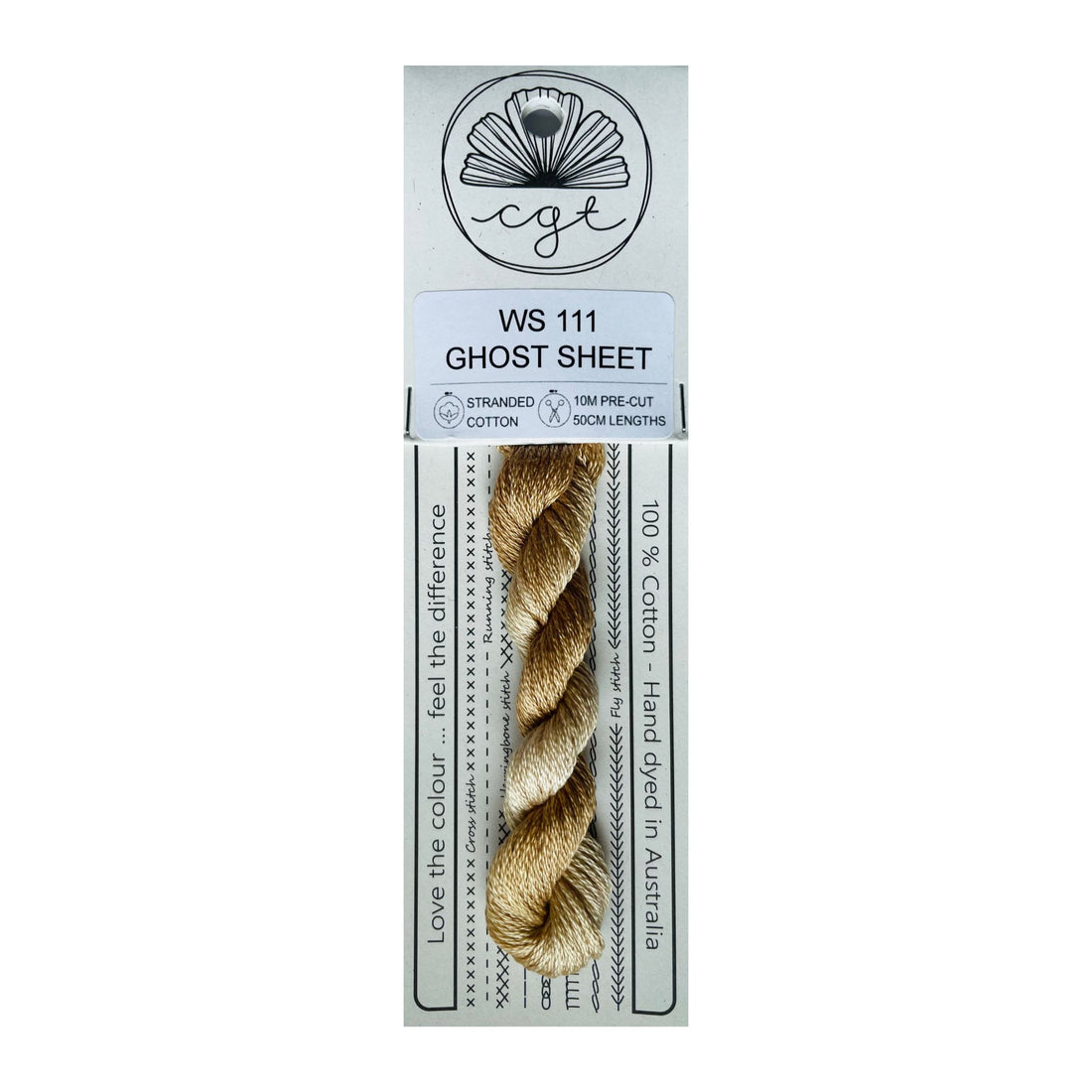
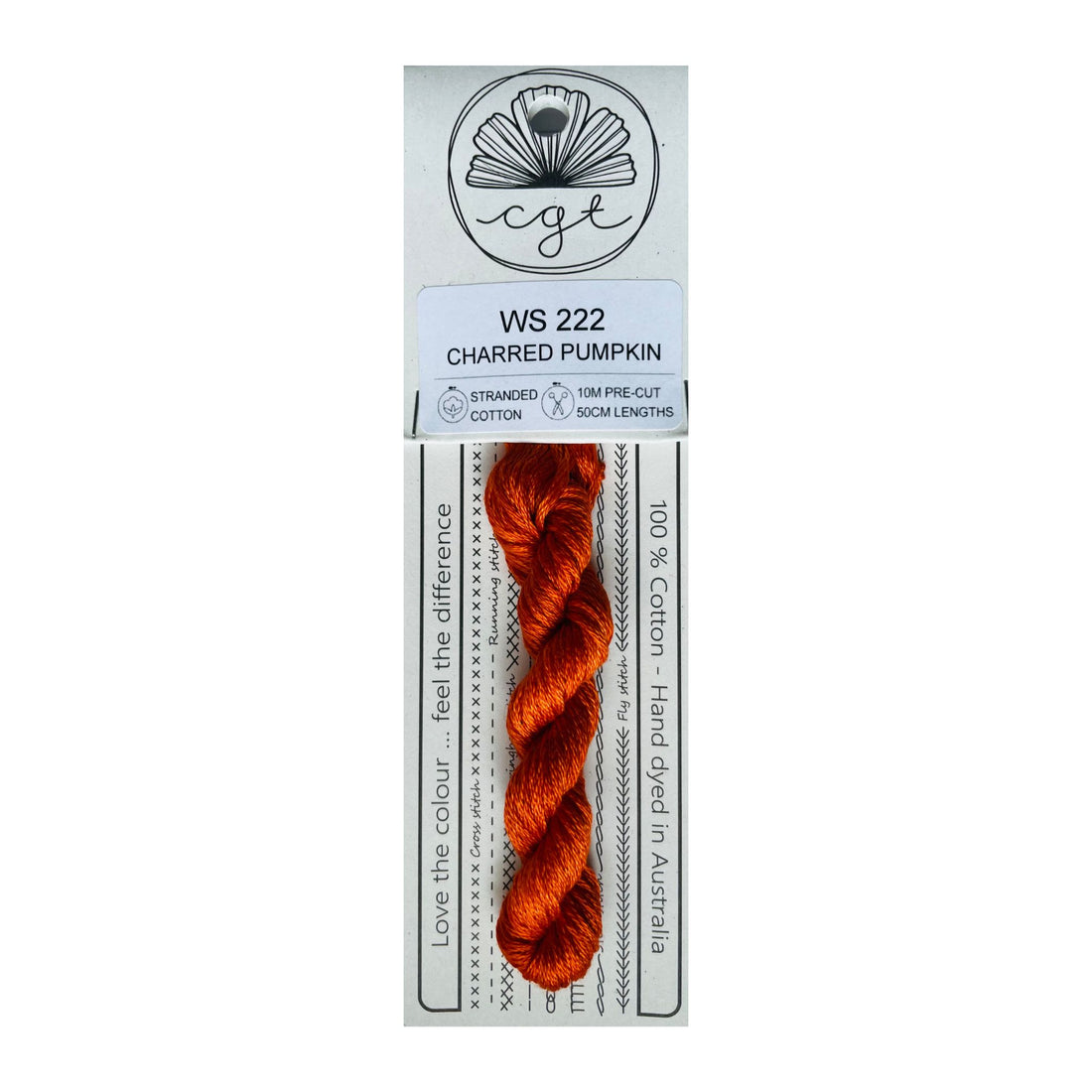
It's also why a short colour-change, hand-dyed thread behaves differently to a flat, single-tone thread on dark fabric. The light and dark tones within the thread create their own contrast.
Our Witchy Stitcher Halloween special edition range sits at both ends of the colour spectrum. The palest and most saturated colours look clear against dark fabric on their own. The darkest colours give you almost no contrast at all, but don't be wary of using dark on dark. You can also use dark thread deliberately where you want a stitch to recede rather than stand out.

When to switch to a lighter fabric
Sometimes dark fabric just isn't right for your current project and that's okay. If a design is small, detailed or has a lot of fractional stitches, the extra strain of working on black can turn a relaxing project into a frustrating one.
A grey or charcoal linen keeps the dramatic, high-contrast look while being easier on the eyes. It's a great middle ground if you love the look but find true black too difficult.
Give it one hour
That first hour is still going to be slow. Even with every adjustment, dark fabric asks more of your eyes and your patience than a pale background. But the same colours that looked good on white will look genuinely striking against black.
Questions
Is black Aida or black linen better for a first attempt?
Black Aida is better for a first attempt. The woven holes are far easier to find by feel and sight than counting threads on linen.
Will a magnifier fix the contrast problem?
A magnifier won't fix the problem on its own. Pair it with good lighting; a bigger view of a hard-to-see hole is still a hard-to-see hole.
My thread still looks patchy after adding a strand. What now?
If your thread still looks patchy after adding a strand, check your tension is snug and make sure you've stitched a block of stitches together before assessing it.
Does hand-dyed thread show its colour variation clearly on black fabric?
Yes, hand-dyed thread often shows its colour variation more clearly than on pale fabric. The light and dark sections along the thread create contrast on their own.